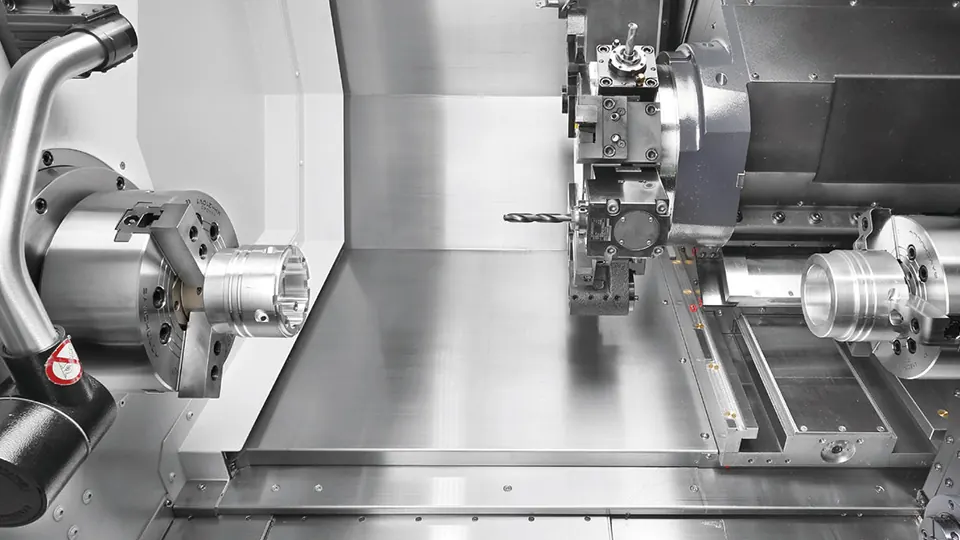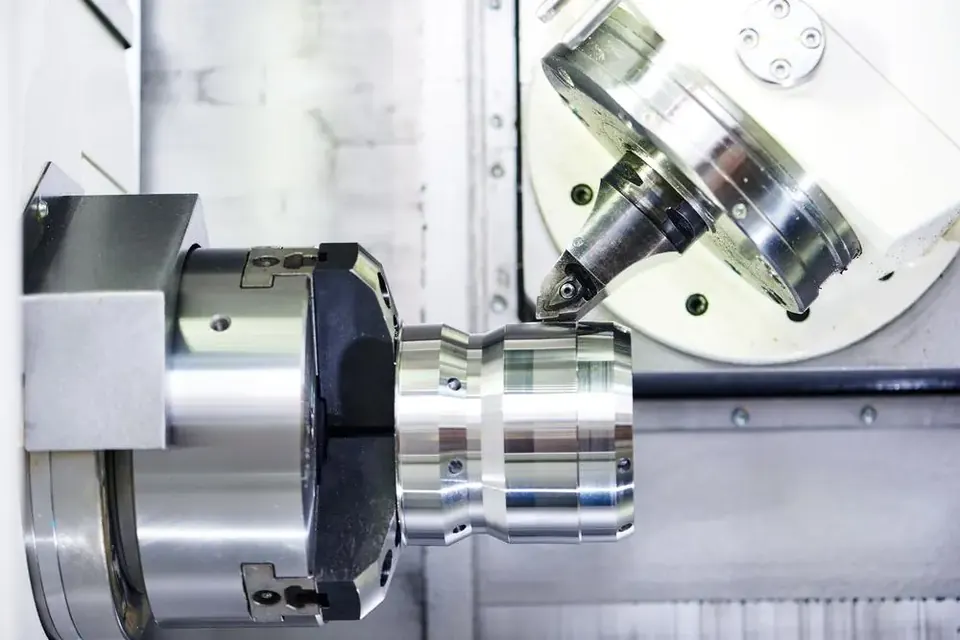
How it works
The main spindle can index or interpolate as a C-axis. Driven tools on the turret mill, drill and tap. A Y-axis moves the tool off the spindle centreline, so flats and holes can be machined off-centre without polar interpolation compromises. Machines with a sub-spindle transfer the part and machine its back face; multitasking machines with a B-axis milling head approach 5-axis capability.
Benefits
- Complete machining reduces handling, queues and fixture costs.
- Features relate to one datum axis — better coaxiality and position.
- Shorter lead times for parts that would otherwise need lathe + mill.
Limits
Driven tools have lower power and stiffness than a machining-centre spindle; heavy milling is often better done on a mill. Programming and set-up take longer, so very small batches of simple parts may not benefit.
Typical parts
- Shafts with flats, keyways and cross-holes
- Hydraulic fittings and manifolds from bar
- Valve bodies and stems
- Flanged connectors with bolt holes
- Gear blanks with milled features
- Medical and instrument components