The principle
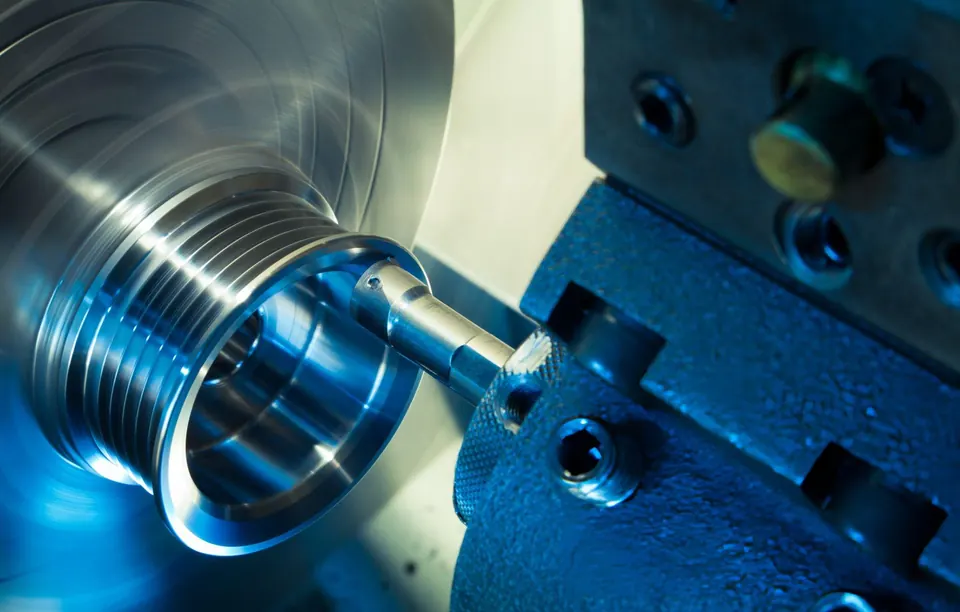
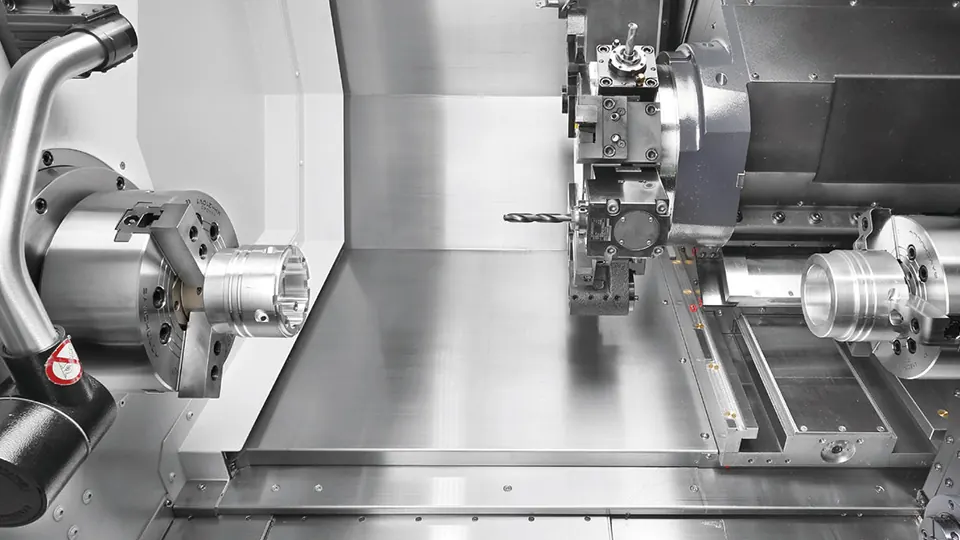
The headstock clamps the bar and moves it along Z through a guide bushing. Tools cut immediately next to the bushing, so the unsupported length is always short — deflection is minimal even on parts with a high length-to-diameter ratio. Driven tools, back-working attachments and a sub-spindle complete the part, which is parted off finished.
When to choose Swiss-type
- Diameter is small relative to length (slender shafts, pins).
- Many features on a small part: threads, cross-holes, flats, slots.
- Medium to high volumes from bar.
- Tight tolerances and fine finishes on small diameters.
For larger diameters or short, stubby parts a conventional lathe is usually more economical. Bar diameter limits depend on the machine and are confirmed per enquiry.
Materials
Free-machining stainless (1.4305/303), 316L, brass (CW614N), free-cutting steels, titanium, aluminium and plastics such as PEEK and POM are typical. Ground bar stock with tight diameter tolerance improves guide-bushing performance.
Typical parts
- Connector pins and contacts
- Medical instrument components
- Small shafts and spindles
- Nozzles and jets
- Fasteners and special screws
- Sensor housings
Swiss-type parts are produced through qualified capacity within our network. The production location and its quality records are disclosed for your project.