Tractors, harvesters and implements use machined shafts, hubs, pins, gear blanks and hydraulic components. Seasonal demand makes reliable supply and stock planning important.
Typical machined components
- PTO and drive shafts
- Hubs and flanges
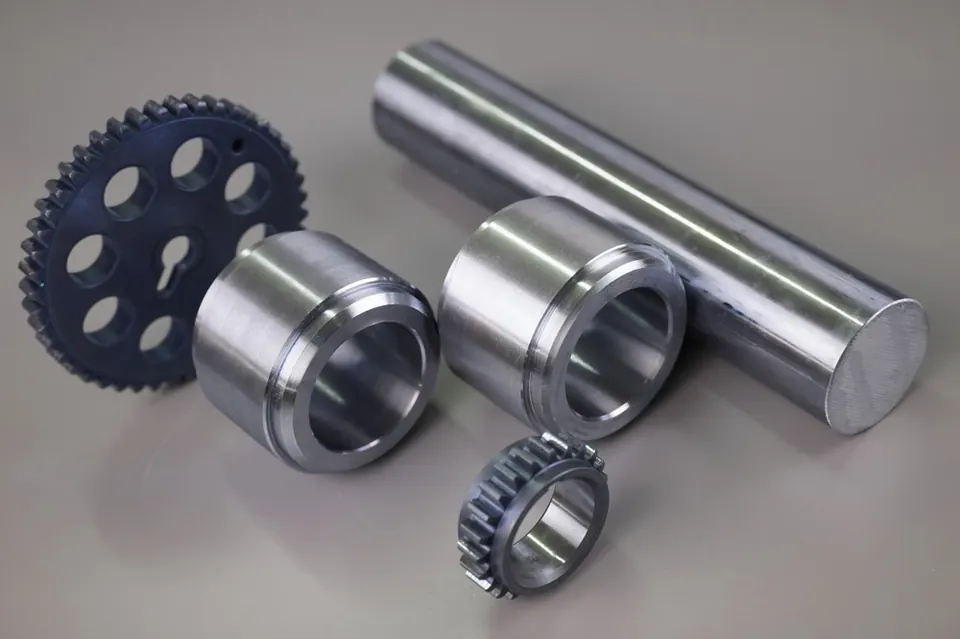
- Gear blanks and sprockets
- Pins and bushings
- Hydraulic components
- Hitch and linkage parts
Common materials
Materials · Material Equivalents
Manufacturing processes
Machining challenges
- Heat-treated steels and induction hardening
- Splines and keyways
- Cost pressure
- Seasonal volume peaks
Dimensional requirements
Fits per ISO 286; spline standards; general tolerances ISO 2768-m.
Surface finish requirements
Ra 1.6–3.2 µm; hardened zones may be ground.
Inspection requirements
Dimensional checks, hardness after heat treatment, case depth verification by partner labs.
Relevant standards
| ISO 730 / ISO 500 | Agricultural tractors: rear-mounted three-point linkage (730) and power take-off (500). |
| ISO 2768-1 / -2 | General tolerances for linear and angular dimensions (part 1: f, m, c, v) and for geometrical features without individual indications (part 2: H, K, L). Part 2 is being superseded by ISO 22081. |
| ISO 4413 / ISO 4414 | Safety rules for hydraulic (4413) and pneumatic (4414) fluid power systems. |
| EU 2023/1230 (Machinery) | EU Machinery Regulation (replacing Directive 2006/42/EC from January 2027). |
| EN 10204 | Types of inspection documents for metallic products: 2.1, 2.2, 3.1 and 3.2. The 3.1 certificate is the usual minimum for traceable machined parts. |
Engineering considerations
- Specify hardening zones and depths
- Use standard splines
- Allow for heat-treatment distortion
- Plan forecast-based stock
Potential manufacturing solutions
Turning and milling with partner heat treatment, combined with forging or casting supply where economical.
Requirements depend on the specific part, drawing and customer specification. Sector approvals or certifications are not implied; where a project requires them, this is confirmed during the RFQ review.